Signed in as:
filler@godaddy.com
The success of our digital future depends on the work we do today and moving forwards.
That success depends on our work in defining and developing technology and interoperability requirements.
Leading to standards creation and wide-spread adoption.

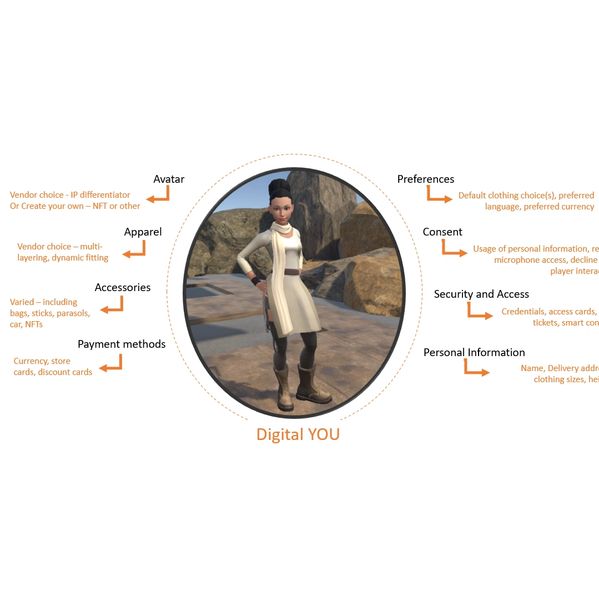
If we are to seamlessly traverse the Metaverse (immersive digital worlds and experiences), we will need to carry our data with us, so a Digital YOU similar to the real-world YOU.
But in order to protect our identity, it is important that
1. We have self-sovereign identity, own our own data, control who see it and when - with a high level of trust with parties we share data
2. There must be privacy by default - with no fingerprinting (no tracking)
3. And the means to hold and transport this information must be lightweight (so usage of metadata and links, rather than embedded objects) and it must be accessible on any platform and device.
Today, the means to achieve this is the Universal Manifest. A portable, signed document that carries everything needed for one entity to introduce itself to another, with trusted communication and data share, utilizing existing standards.
Metaverse Standards Forum - OMA3 (Specification Development)
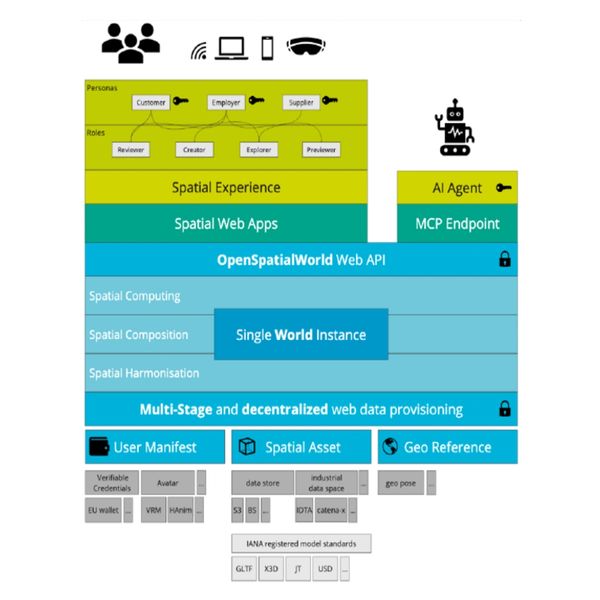
Today we use the world-wide web to load and move between web pages.
The Web of Worlds (WoW) will enable you to load and move between 3D worlds - a 3D Web.
"3D Web - A platform made up of many addressable, linked spatial experiences (virtual worlds)"
You can move to any 3D experience, or location within a 3D experience, on any device with a browser. And within a VR headset, this means you will be able to load and walk between 3D fully immersive experiences.
The visitor to these experiences will be able to carry their information seamlessly between worlds using their "User Manifest" (the name used here for the Digital YOU "Universal Manifest").
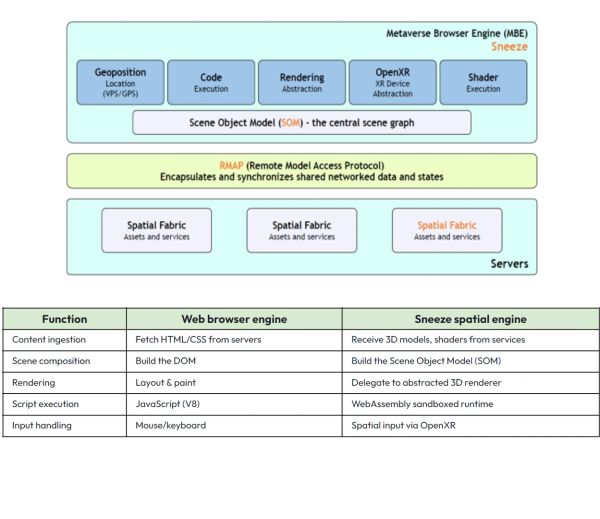
For the Metaverse to feel more like the real world, we need to be able to view all proximate virtual experiences without having to search for and load each one individually.
The Open Metaverse Browser Initiative is designed to enable this to happen - focused on creating a reference architecture and implementation of a browser engine (Sneeze) to enable "3d world proximity detection".
"Multi location-based experiences displayed at the same time, regardless of vendor (multi-origin)"
If you are walking through a tourist site in the real world wearing AR glasses, you will see all proximate AR experiences to the one you are currently viewing. The same will be for VR experiences when using a VR device.
The first application to support the open metaverse browser engine "Sneeze" is a new Metaverse browser "Artemis", although "Sneeze" is also designed to be implementable by existing browsers.